







Smartwatch Stress Tracking: How It Works and What It Can Tell You
Can a smartwatch really tell when you're stressed? The answer is more complicated than a simple yes or no.
Smartwatch stress tracking uses physiological signals, such as heart rate and, on supported devices, heart rate variability (HRV), to estimate changes that may be associated with physical or mental stress.
These measurements can help you notice patterns, but they cannot directly read your emotions, diagnose anxiety, or identify the exact cause of stress.
For anyone balancing work, family, exercise, and everyday responsibilities, a smartwatch can offer another way to reflect on daily wellness. The key is understanding what the numbers mean—and what they don't.
In this guide, we'll explain how smartwatch stress tracking works, which measurements matter, how reliable stress scores are, and how to use wearable insights to build healthier daily habits.

What Is Smartwatch Stress Tracking?
Smartwatch stress tracking is a wellness feature that uses sensor measurements and software algorithms to estimate physiological changes associated with stress.
When you experience a challenging situation, your autonomic nervous system helps regulate changes in heart rate, breathing, and other bodily functions.
Some smartwatches analyze these signals to generate a numerical stress score or display categories such as low, moderate, or high stress.
However, physiological stress and emotional stress are not always the same thing.
For example, your heart rate might increase because you're exercising, drinking coffee, feeling excited, or experiencing anxiety. A wearable device may detect the physiological change without knowing why it happened.
That's why stress tracking is most useful as a tool for observing personal trends rather than treating individual readings as definitive conclusions.
How Do Smartwatches Measure Stress?
Most consumer smartwatches rely on a combination of sensors, algorithms, and historical measurements.
The exact method varies by manufacturer and model. Four measurements are particularly relevant to understanding how wearable stress tracking works.
1. Heart Rate Monitoring
Heart rate measures how many times your heart beats per minute.
Many smartwatches use optical sensors that detect changes in blood volume beneath the skin. This technology is called photoplethysmography, or PPG.
During a stressful situation, heart rate may increase as part of the body's physiological response.
However, an elevated heart rate does not automatically mean you're stressed.
Other factors include:
- Physical exercise and movement
- Caffeine consumption
- Dehydration
- Illness or fever
- Emotional excitement
- Certain medications
Instead of interpreting a single reading as a warning, compare your resting heart rate over time and consider what you were doing when the measurement occurred.
For a broader explanation of wearable metrics, explore FANY's Wellness & Fitness guides.

2. Heart Rate Variability (HRV)
Heart rate variability measures differences in the time intervals between consecutive heartbeats.
Even when your heart beats at a relatively steady rate, the intervals between beats are not perfectly identical.
HRV reflects several physiological processes, including aspects of autonomic regulation and breathing.
Some wearable devices use HRV-derived measurements as part of their stress or recovery estimates.
However, HRV requires careful interpretation.
A lower HRV reading does not always mean you're stressed, and a higher HRV reading does not guarantee better health.
HRV varies with age, individual physiology, physical activity, breathing, sleep, illness, medication, and measurement conditions.
Your personal baseline and longer-term changes are generally more informative than comparisons with someone else's HRV.
A longitudinal study of wearable HRV and perceived stress found that the relationship between physiological measurements and people's reported stress was relatively weak in everyday environments.
This reinforces an important point: HRV can contribute useful information, but it should never be treated as a direct measurement of emotional well-being.
3. Electrodermal Activity (EDA)
Some specialized wearables include electrodermal activity sensors.
EDA measures changes in the electrical properties of the skin associated with sweat gland activity.
Because sweat gland activity can respond to sympathetic nervous system activation, EDA may provide information about physiological arousal.
However, increased arousal is not necessarily negative stress. It can occur during excitement, physical activity, or other emotional experiences.
Not every smartwatch includes an EDA sensor. A standard optical heart rate sensor does not automatically measure electrodermal activity.
Before purchasing a stress-tracking smartwatch, check the manufacturer's published sensor specifications to understand exactly which measurements it supports.
4. Sleep and Activity Patterns
Stress tracking becomes more meaningful when considered alongside sleep and daily activity.
For example, you might notice that nights of shorter sleep frequently occur before days when you feel more overwhelmed.
Alternatively, regular walking or consistent sleep schedules may coincide with periods when you report feeling better.
These patterns do not establish cause and effect, but they can help you ask more useful questions about your routine.
Sleep tracking, step counts, and activity reports can provide context for interpreting your overall wellness.

What Can a Smartwatch Stress Monitor Actually Tell You?
Smartwatch measurements can provide useful information, but understanding their limitations is essential.
| Measurement | What It Can Tell You | What It Cannot Tell You |
|---|---|---|
| Heart rate | Your approximate heartbeats per minute | Whether you're anxious or emotionally stressed |
| HRV | Variation between heartbeats, where supported | Your exact stress level or mental health condition |
| EDA | Changes in skin conductance, where supported | Which specific emotion you're experiencing |
| Sleep duration | Estimated time spent asleep | Whether you have a sleep disorder |
| Stress score | An algorithm-based estimate of physiological stress | A medical diagnosis or the precise cause of stress |
| Activity tracking | Estimated daily movement patterns | Whether you're physically or mentally recovered |
The most important distinction is between measuring a physiological signal and interpreting its meaning.
A smartwatch may detect changes in your body, but those changes still require context.
Can a Smartwatch Accurately Detect Stress?
Smartwatches can detect certain physiological changes associated with stress, but they cannot reliably determine every instance of psychological stress.
Consumer wearable algorithms face several challenges.
First, the same physiological signals can have multiple causes. Exercise, excitement, illness, and anxiety may produce overlapping patterns.
Second, sensor accuracy varies. Wrist movement, fit, skin contact, and measurement conditions can influence optical sensor readings.
Third, stress algorithms are not universally standardized. Different manufacturers may use different measurements and scoring methods.
A scientific review, Wearable Technologies for Health Research: Opportunities, Limitations, and Practical Considerations, explains that detecting psychological stress reliably outside controlled research environments remains challenging.
Therefore, wearable stress scores should be viewed as estimates rather than definitive measurements.
How to Interpret Your Stress Score
If your smartwatch reports an unusually high stress estimate, consider these questions:
- Have you been physically active recently?
- Did you sleep differently than usual?
- Have you consumed caffeine?
- Are you feeling tense, worried, excited, or unwell?
- Is this an isolated reading or a recurring pattern?
You may find it helpful to note how you actually feel and compare those observations with your wearable data.
A smartwatch should support self-awareness—not replace it.
How to Track Stress With a Smartwatch
You don't need to check your stress score constantly to benefit from wearable tracking.
A simple routine can help you understand your patterns without becoming overly focused on the numbers.
Step 1: Establish Your Personal Baseline
Begin by wearing your smartwatch consistently during your normal daily routine.
Review available measurements such as resting heart rate, sleep duration, and stress estimates over several days.
Avoid comparing your numbers directly with those of friends or family members.
Individual measurements can vary substantially, and the meaning of a particular score depends on the device and its algorithms.
The goal is to become familiar with your typical patterns.
Step 2: Record How You Actually Feel
Wearable data becomes more useful when combined with your own observations.
For example, you might record:
- Morning: Slept poorly and felt tired
- Afternoon: Had a demanding meeting and felt tense
- Evening: Took a walk and felt more relaxed
Compare these observations with any available stress estimates or heart rate trends.
If the numbers don't match your experience, remember that a wearable algorithm cannot fully interpret your emotional state.
Step 3: Look for Patterns Over Time
After a week or two, review your notes.
Do particularly busy workdays coincide with less sleep?
Do you feel more comfortable on days when you take regular movement breaks?
Does your evening routine influence how rested you feel the following morning?
Use these observations as starting points for healthier habits—not as proof that one activity caused a particular physiological change.
How Stress and Sleep Affect Each Other
Stress and sleep have a complicated, two-way relationship.
Stress can make it harder to fall asleep or stay asleep. In turn, insufficient or disrupted sleep may affect mood, concentration, and how you respond to challenges.
This is why sleep information can be useful alongside wearable stress tracking.
For example, you might notice that you feel more irritable after several nights of inconsistent bedtimes.
A smartwatch may help you review estimated sleep duration, bedtime consistency, and other available sleep metrics.
However, consumer sleep-stage estimates are not equivalent to clinical sleep assessments.
According to the CDC's guidance on sleep, healthy sleep involves sufficient sleep duration, good quality, and a consistent schedule.
For most adults, a useful starting point is aiming for at least seven hours of sleep, while recognizing that individual needs vary.
If sleep problems persist or interfere with daily life, speak with a qualified healthcare professional rather than relying only on wearable reports.
For more on sleep patterns in women, read Why Do Women Suffer More from Insomnia?.
How FANY Luna Supports Everyday Wellness Awareness
A smartwatch doesn't need to make medical predictions to be useful in everyday life.
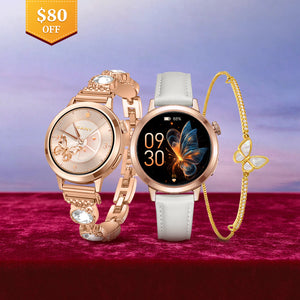
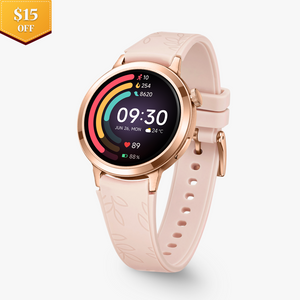
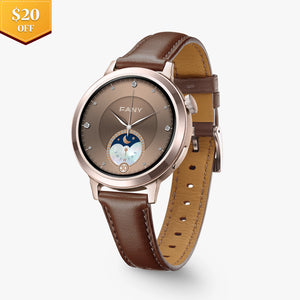
FANY Luna is designed for women looking for a combination of everyday wellness features and an elegant, wearable design.
Its published product information includes heart rate monitoring, sleep tracking, emotion and stress-related wellness features, and guided breathing.
Rather than using these features to diagnose stress, consider them tools that can help you become more attentive to your daily habits.
Review Your Heart Rate and Sleep Patterns
FANY Luna provides heart rate information and estimated sleep tracking data.
You can use these measurements as additional context when reflecting on how rested or active you feel.
For example, if you've had a particularly busy week, reviewing bedtime consistency may encourage you to prioritize a more regular sleep schedule.
Remember that consumer measurements have limitations and should not be interpreted as medical diagnoses.
Use Wellness and Stress Estimates Thoughtfully
FANY describes emotion and stress monitoring among Luna's wellness features.
If your current watch software provides stress or mood estimates, review them alongside your actual experiences.
A displayed mood category should not be treated as proof of what you're feeling.
Likewise, a low stress estimate doesn't mean your concerns or emotions are unimportant.
The most helpful approach is to combine what the watch displays with your own reflections.
Try Guided Breathing When You Need a Moment of Calm
FANY Luna also lists guided breathing among its wellness tools.
When you feel tense during the day, you can try a brief, comfortable breathing session.
Find a quiet place, sit comfortably, and follow the breathing guidance at a pace that feels natural.
You might use the exercise before a meeting, after work, or while settling into your evening routine.
Guided breathing can help some people feel calmer, although experiences vary and it is not a treatment for anxiety disorders.
For product-specific routines, see How to Master Stress Management with a FANY Luna Smartwatch.
Three Everyday Habits to Support a Calmer Routine
Wearable data is most valuable when it encourages realistic, sustainable habits.
Here are three practical ways to use your smartwatch alongside simple wellness practices.
1. Make Your Morning Check-In More Meaningful
Instead of immediately checking notifications, spend a minute reflecting on how you feel.
Ask yourself:
- Did I sleep enough?
- Do I feel rested?
- Is there anything making me tense today?
You can review available sleep information, but don't let one unfavorable score define your entire day.
Use it as context, not a verdict.
2. Take Short Breaks During Busy Days
When work or personal responsibilities feel demanding, brief breaks can make your day more manageable.
Stand up, stretch, walk around, or try a comfortable breathing exercise.
If your smartwatch provides reminders or wellness tools, use them to support habits that fit your schedule.
The aim is not to eliminate every stressful moment. It's to build opportunities for rest and reflection.
3. Establish a Consistent Evening Routine
Your evening habits can influence how easily you settle down for sleep.
Consider maintaining a regular bedtime, reducing stimulating activities close to bedtime, and making your sleeping environment comfortable.
The National Heart, Lung, and Blood Institute's healthy sleep guidance offers practical recommendations for developing better sleep habits.
If you use your smartwatch overnight, compare broad trends over time instead of worrying about every individual sleep-stage estimate.
Common Mistakes When Using Smartwatch Stress Tracking
Even useful wellness tools can become less helpful when their measurements are misunderstood.
Here are four common mistakes to avoid.
Treating a stress score as a medical diagnosis. Consumer stress estimates cannot diagnose anxiety, depression, or other medical conditions.
Assuming higher HRV is always better. HRV varies between individuals and measurement conditions. A single value rarely tells the full story.
Checking your measurements too often. Constantly monitoring your data may become counterproductive, particularly if unexpected readings make you more anxious.
Ignoring your own experience. Your feelings, symptoms, circumstances, and personal observations matter more than a single smartwatch score.
If using wearable data begins to increase your worry, consider reducing how often you check it.
Frequently Asked Questions
Can a smartwatch detect stress and anxiety?
A smartwatch may estimate physiological changes associated with stress using available measurements such as heart rate or HRV. However, it cannot reliably diagnose anxiety or determine precisely how you're feeling. Psychological stress and physiological responses do not always align.
How do smartwatches calculate stress levels?
Different devices use different algorithms. Some analyze HRV, heart rate, or other sensor data and convert those measurements into a stress estimate. The specific inputs, scoring methods, and accuracy vary by model.
Does a higher heart rate always mean more stress?
No. Heart rate also increases during exercise, excitement, illness, and other circumstances. An elevated reading alone cannot establish that you're experiencing emotional stress.
Can a smartwatch track stress while sleeping?
Some smartwatches estimate physiological stress or recovery during sleep. Others provide only sleep duration, sleep stages, or heart rate information. Check your device specifications to understand which measurements are available.
Is HRV the same as a smartwatch stress score?
No. HRV is a measurement of variation between heartbeats. A stress score is an algorithm-generated estimate that may incorporate HRV or other signals. Not every device measures or displays HRV.
Does FANY Luna measure stress?
FANY Luna's published product information lists emotion and stress-related wellness features, along with heart rate monitoring and guided breathing. These functions are intended for everyday wellness awareness rather than clinical stress diagnosis. Availability and displays may vary by software version.
Can breathing exercises help reduce stress?
Slow, comfortable breathing exercises may help some people relax and become more aware of their breathing. Results vary, and breathing exercises should not replace professional care when stress or anxiety significantly affects daily life.
Final Thoughts: Let Your Smartwatch Inform You, Not Define You
Smartwatch stress tracking can make everyday physiological patterns easier to notice, especially when combined with heart rate measurements, sleep trends, and personal observations.
But a smartwatch cannot fully explain your emotions or determine whether you're experiencing a mental health condition.
The most useful approach is to look for longer-term patterns, interpret readings within context, and focus on manageable habits that support your well-being.
For women who want everyday wellness tools in a lightweight, stylish design, explore the FANY Luna smartwatch or browse the full FANY smartwatches for women collection.
Ultimately, wearable data should help you understand your daily routine—not add another source of pressure.


A nurse-turned-personal trainer and founder of Diary of a Fit Mom, Sia lost 45 lbs through clean eating and lifestyle changes—and has been helping women do the same ever since. Drawing on her own journey through pregnancy, motherhood, and IVF, she's passionate about making fitness feel approachable, realistic, and empowering for women at every stage of life. Your trainer and friend.