







How Do Smartwatches Count Steps, Measure Heart Rate, and Track Sleep?
Learn how smartwatches count steps, measure heart rate, estimate calories, and track sleep—and what affects their accuracy.
Smartwatches count steps using motion sensors, measure heart rate with optical technology, and estimate sleep patterns by analyzing movement and physiological signals. These sensors work with algorithms to turn information from your wrist into everyday fitness and wellness insights.
But how do smartwatches count steps, measure heart rate, and track sleep, and how accurate are the results?
Whether you're checking your daily step count, monitoring your workouts, or reviewing last night's sleep, understanding how smartwatch tracking works can help you make better sense of your data.
In this guide, we'll explain the technology behind smartwatch tracking, what affects measurement accuracy, and how to get more consistent results.

How Do Smartwatches Count Steps?
Smartwatches count steps by using a built-in accelerometer that detects movement and identifies patterns associated with walking and running.
How a 3-Axis Accelerometer Works
Most smartwatches use a three-axis accelerometer to measure acceleration in three directions.
When you walk or run, your wrist produces recurring movement patterns. The accelerometer detects these changes, and the smartwatch's algorithm analyzes their timing and intensity.
Rather than counting every arm movement as a step, the software attempts to distinguish walking and running from unrelated activities.
For example, your watch may recognize a regular walking rhythm while filtering out some movements caused by typing or waving your hand.
However, no step-counting algorithm is perfect.
Why Your Smartwatch May Count Steps Incorrectly
Several everyday activities can affect step-counting accuracy:
Limited arm movement: Pushing a stroller or shopping cart may reduce the wrist motion normally associated with walking.
- Repetitive hand gestures: Certain arm movements may occasionally be mistaken for steps.
- Slow walking: Short or irregular walking patterns can be harder to identify.
- Loose watch fit: Excessive movement of the watch may affect sensor readings.
Smartwatch step counts are therefore best understood as estimates of daily activity rather than exact measurements.
For everyday fitness tracking, comparing your activity trends over time is often more useful than focusing on small differences in individual step counts.
How Do Smartwatches Measure Heart Rate?
Most smartwatches measure heart rate using a technology called photoplethysmography (PPG).
PPG is an optical technique that detects changes in blood volume near the skin's surface.
How Optical Heart Rate Sensors Work
The process involves three main steps:
- Light emission: LEDs on the back of the smartwatch shine light into your skin.
- Light detection: A photodetector measures the light returning from the tissue.
- Heart rate calculation: The watch analyzes rhythmic changes in the light signal associated with each heartbeat and estimates your heart rate in beats per minute (BPM).
Many wrist-based heart rate monitors use green LEDs, although sensor designs and wavelengths vary between devices.
As blood volume changes with each heartbeat, the amount of light detected by the sensor also changes. The watch processes these signals to estimate your pulse.

What Can Affect Smartwatch Heart Rate Accuracy?
Optical heart rate sensors work best when they maintain stable contact with your skin.
Several factors can influence readings:
- Loose or inconsistent skin contact
- Rapid wrist movement during workouts
- Cold temperatures and reduced peripheral blood flow
- Tattoos and differences in skin characteristics
- Sweat, lotion, or debris around the sensor
- Strong environmental light entering around the watch
Heart rate measurements may be less consistent during activities involving rapid movement or sudden changes in exercise intensity.
Tip: Wear your smartwatch snugly above your wrist bone, following the manufacturer's fit recommendations. The watch should remain stable without feeling uncomfortably tight.
Heart rate trends can help you understand changes during exercise and daily activities, but consumer smartwatch readings should not replace medical assessments.
How Do Smartwatches Calculate Calories Burned?
Unlike heart rate, calories burned are not measured directly by a smartwatch.
Instead, smartwatches estimate calorie expenditure using mathematical models and available activity data.
Depending on the device and its features, these calculations may include:
- Age, sex, height, and weight
- Heart rate
- Activity type and workout duration
- Movement intensity
- Estimated distance and pace
For example, a smartwatch may combine motion and heart rate information to estimate energy expenditure during a running workout.
Some devices also distinguish between active calories burned during physical activity and resting energy expenditure.
Are Smartwatch Calorie Estimates Accurate?
Calorie estimates can vary considerably between devices, activities, and individuals.
A smartwatch cannot directly measure the total energy your body uses. Its result depends on the accuracy of the underlying sensors and the assumptions built into its calculation model.
For this reason, calorie estimates are more useful for observing general activity trends than for determining an exact number of calories burned.
If you use your smartwatch to support fitness goals, focus on consistent activity habits rather than treating every calorie estimate as an exact value.
How Do Smartwatches Track Sleep?
Smartwatches track sleep by combining movement data with physiological signals, such as changes in heart rate.
The accelerometer helps identify periods of movement and inactivity, while optical sensors provide additional information about the body's nighttime patterns.
Software algorithms use these signals to estimate when you fall asleep, when you wake up, and how your sleep may be distributed across different stages.
How Smartwatches Estimate Sleep Stages
Depending on the device, a smartwatch may report:
| Sleep Stage | What Happens |
|---|---|
| Light sleep | Your body transitions into sleep, and you can generally be awakened more easily. |
| Deep sleep | Slow-wave sleep supports important restorative processes. |
| REM sleep | Brain activity increases, and vivid dreaming commonly occurs. |
| Awake | Periods of wakefulness before or during the night. |
Smartwatches infer these stages from indirect signals. They do not directly measure brain activity in the same way as clinical polysomnography, which uses brain-wave and other physiological recordings.
This means your smartwatch may be reasonably useful for tracking sleep duration and general patterns while providing less reliable estimates of individual sleep stages.
How to Use Smartwatch Sleep Data
Instead of concentrating on a single night's sleep score, look for patterns across several nights.
You might consider:
- Whether your sleep schedule is consistent
- Changes in your estimated total sleep time
- How often you experience interrupted sleep
- Whether your sleep patterns change alongside daily habits
Sleep tracking can help you become more aware of your routine, but it cannot diagnose sleep disorders or determine sleep quality with clinical precision.
How Accurate Are Smartwatch Measurements?
Smartwatch accuracy depends on what is being measured, the sensors used, the algorithms, and how the device is worn.
Research has found that different smartwatch measurements have different levels of reliability.
| Measurement | How It Works | Important Limitation |
|---|---|---|
| Step count | Motion sensor and movement classification | May miss steps or count unrelated movements |
| Heart rate | Optical PPG sensor | Motion and poor skin contact can affect readings |
| Calories burned | Algorithmic estimate based on activity and personal data | Energy expenditure estimates may have substantial error |
| Sleep duration | Movement and physiological patterns | Quiet wakefulness may be confused with sleep |
| Sleep stages | Classification of movement and physiological signals | Individual sleep stages may be misclassified |
A smartwatch is most helpful when you understand which measurements are direct sensor readings and which are estimates produced by algorithms.
Consistent long-term tracking can provide useful personal context, even when individual readings are imperfect.
How to Improve Smartwatch Tracking Accuracy
A few simple habits may help your smartwatch collect more consistent information.
1. Wear Your Watch Correctly
Position the watch above your wrist bone and adjust the strap until it fits securely without causing discomfort.
During exercise, the watch should not slide or rotate excessively.
Avoid overtightening the band, as this can irritate your skin.
2. Keep the Optical Sensor Clean
Gently clean the back of your smartwatch according to the manufacturer's instructions.
Sweat, sunscreen, and lotion can interfere with good sensor contact.
Make sure the sensor and your skin are dry before putting the watch back on.
3. Enter Accurate Personal Information
If your smartwatch app requests your height, weight, age, or other profile details, keep them updated.
These values may be used to estimate calories burned, distance, and other activity measurements.
4. Choose the Appropriate Workout Mode
Select the corresponding activity mode when available, such as walking, running, or cycling.
Different workout modes may use different tracking settings and estimation methods.
5. Look at Trends Instead of Individual Numbers
A single unusual reading does not always indicate a meaningful change in your health.
Pay attention to repeated patterns, use the same wearing position whenever possible, and consider other factors such as activity, sleep, and device fit.
FANY Luna: Everyday Wellness Tracking in a Lightweight Smartwatch
A useful smartwatch should fit comfortably into everyday life, whether you're walking, working out, sitting at your desk, or preparing for bed.
The FANY Luna Smartwatch combines daily activity tracking, heart rate monitoring, sleep tracking, and a compact design for women who prefer a lightweight wearable.
FANY Luna Silicone: Designed for Active Days
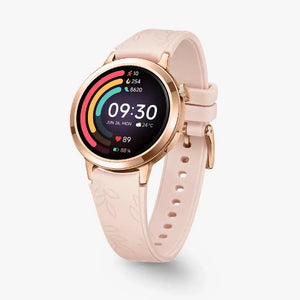
The FANY Luna Silicone Smartwatch weighs 29.2g and features a soft, hypoallergenic silicone strap.
Its flexible band is designed for comfortable everyday wear, making it a practical choice for activities such as walking, running, yoga, and fitness workouts.
The watch supports step counting, heart rate monitoring, calorie estimates, and sleep tracking.
A secure fit can also help maintain consistent skin contact during activity.
FANY Luna Leather: Lightweight Everyday Style
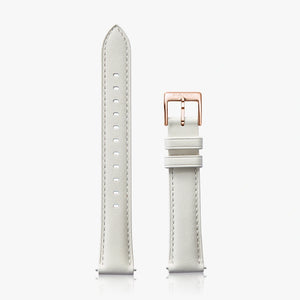
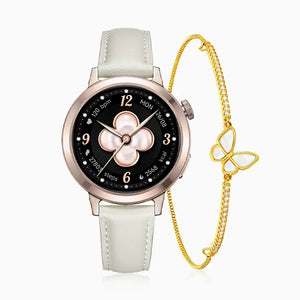
The FANY Luna Leather Smartwatch weighs 23.9g and offers a more classic appearance suitable for workdays, casual outfits, and daily routines.
Its compact design provides a lighter alternative to larger sports watches while offering activity, heart rate, and sleep tracking features.
Both FANY Luna styles bring everyday wellness information to your wrist without requiring a bulky fitness watch.
Important: FANY Luna is a consumer wellness device. Its readings and estimates are intended for general fitness and wellness tracking, not medical diagnosis or treatment. The product weights and features above are based on the manufacturer's published specifications, not independent accuracy testing.
FAQ
Do smartwatches count steps using GPS?
No. Smartwatches generally use motion sensors to count steps. GPS, when available, is primarily used to estimate outdoor location, distance, route, and pace. A smartwatch does not need GPS simply to count steps.
Why does my smartwatch count steps when I'm not walking?
Repetitive wrist movements, such as certain household tasks or hand gestures, can resemble walking-related motion. Although smartwatch algorithms attempt to filter these movements, false step counts can still occur.
Can a smartwatch measure heart rate without moving?
Yes. Optical heart rate sensors can estimate your pulse while you're sitting, resting, or sleeping, provided the device supports the relevant monitoring mode and maintains adequate skin contact.
Can a smartwatch accurately detect deep sleep?
Smartwatches estimate deep sleep from movement and physiological patterns. They cannot directly confirm deep sleep in the same way as a clinical sleep study that measures brain activity. Sleep-stage estimates should be interpreted cautiously.
How do smartwatches know how many calories you burn?
They estimate energy expenditure using available information such as heart rate, movement, workout duration, and personal profile data. The result is an estimate, not a direct measurement.
Does wearing a smartwatch tighter improve accuracy?
A stable fit may improve optical sensor contact, but tighter is not always better. A watch should be snug enough to avoid excessive movement without restricting circulation or causing irritation.
Final Thoughts
Smartwatches use a combination of motion sensors, optical technology, and algorithms to track everyday activity and estimate wellness metrics.
Accelerometers help count steps, optical sensors monitor changes associated with heartbeats, and combined physiological signals help estimate sleep patterns.
Understanding these technologies—and their limitations—makes it easier to interpret smartwatch data without expecting perfect precision.
For a lightweight option that supports everyday fitness and wellness tracking, explore the FANY Luna Smartwatch collection, including silicone and leather designs made to fit different routines and personal styles.
 Sia Cooper


A nurse-turned-personal trainer and founder of Diary of a Fit Mom, Sia lost 45 lbs through clean eating and lifestyle changes—and has been helping women do the same ever since. Drawing on her own journey through pregnancy, motherhood, and IVF, she's passionate about making fitness feel approachable, realistic, and empowering for women at every stage of life. Your trainer and friend.