



How to Build a Daily Wellness Routine With a Smartwatch for Women
Learn how to build a simple daily wellness routine with a smartwatch by using sleep, activity, workouts, and wellness data to understand your habits over time.
The functions of a smartwatch go far beyond tracking exercise data. If used wisely, it can help you monitor your sleep, daily activities, exercise, heart rate, and other health-related trends, as well as your daily routines.
The goal of establishing daily health habits is not to collect as much data as possible or to achieve perfect scores every day. Instead, the data from the smartwatch can help you discover patterns: Is your sleep regular? Does your activity level decrease when you are busy? Is your exercise more regular? Do you need to reserve more rest time in your schedule?
This guide explains how to use a wellness smartwatch from morning to night to build simple, sustainable habits—and how to use smartwatch data as context rather than letting the numbers control your day.
Quick Answer: Can smartwatches help establish daily health habits?
Yes, but they are most suitable as tools for monitoring and enhancing health awareness, rather than replacing actual healthy living habits.
Smartwatches can help you monitor sleep, daily activities, exercise, heart rate, and other health-related trends. The most effective approach is to select a few indicators that fit your daily life, observe the changes in data over a period of time, and make small and practical adjustments accordingly.
You don't need to check every indicator every day. A simple daily routine could be
Morning → View sleep data → Day activities → Short break → Exercise → Evening relaxation → View long-term trends.
What Should a Daily Wellness Routine Include?
The concept of "health" is far more than just exercise. A sustainable healthy lifestyle can include aspects such as sleep, daily activities, physical exercise, physical recovery, relaxation, and the balance between work and personal time.
Although smartwatches can help you monitor some of these indicators, they cannot replace the need to establish your own habits. The most effective approach is to select a few small habits that can naturally fit into your existing schedule. A better approach is to choose a few habits that fit naturally into your lifestyle.
|
Time |
Wellness Focus |
What to Check |
Simple Action |
|
Morning |
Sleep |
Has my sleep been consistent? |
Review the previous night's trend |
|
Workday |
Movement |
Have I been sitting too long? |
Take a short walk or movement break |
|
Afternoon |
Stress awareness |
Do I need a pause? |
Step away and breathe |
|
After Work |
Activity |
Am I staying active consistently? |
Walk, exercise, or do an activity you enjoy |
|
Evening |
Wind-down |
Am I giving myself time to relax? |
Reduce unnecessary work and screen distractions |
|
Monthly |
Cycle awareness |
Am I noticing recurring patterns? |
Record and review cycle-related information |
The goal is not to complete everything on this list every day. Choosing two or three habits you can maintain may be more meaningful than trying to create a “perfect wellness routine.”
Morning: Use Sleep Tracking to Look for Patterns
Many people check sleep tracking as soon as they wake up. Although the sleep score can serve as a quick overview, it should not be regarded as the absolute standard for measuring sleep quality. If there are fluctuations in the score, focus on the overall trend rather than reacting solely to a single score result. But focusing too much on one score can turn smartwatch data into another source of pressure.
Instead, consider questions such as, "Have I been going to bed later than usual?" Has my total sleep time decreased this week? Am I waking up more often during the night?
One short night after a social event may not tell you much. But if you have been going to bed one or two hours later for two weeks, that trend may be more useful when thinking about your evening routine.
Smartwatches and fitness trackers targeted at the consumer market usually estimate sleep and sleep stages based on signals such as physical activity and heart rate, rather than directly measuring brain activity. Therefore, the readings for each sleep stage should be regarded as estimates and should be interpreted from a trend perspective, rather than being considered as precise measurement data.
During the Day: Use Activity Tracking to Notice Movement Patterns
One of the most practical uses of activity tracking is that it enables you to realize how much time you spend sitting, walking, or being active throughout the day.
That is where activity tracking can be useful.
If your weekday activity is usually fairly consistent but drops during a particularly busy period, small changes can help you bring movement back into your routine. You might take a short walk after lunch, turn a coffee run into a longer walk, or walk part of your commute home.
A smartwatch does not need to push everyone toward the same step goal. It can be more useful for understanding your personal baseline and noticing when your normal movement pattern changes.
During a Busy Workday: Make Time for a Short Pause
Back-to-back meetings, deadlines, commuting, poor sleep, and caffeine can all affect how you feel throughout the day.
Some smartwatches provide stress-related estimated data based on physiological signals, but these readings should not be interpreted as a direct measurement of stress levels, nor should they be regarded as an explanation of the causes of stress. Instead, use them as a reminder to check in with yourself:
Busy moment → Pause → Breathe → Continue.
After a long meeting, for example, you might stand up, get some water, walk for a few minutes, or take a short breathing break.
The goal is not to let a stress score define how you feel. It is to create small moments of awareness during a busy day.
After Work: Build a Fitness Routine You Can Maintain
A good fitness routine does not have to mean high-intensity exercise every day.
A realistic week might look like:
- Monday: Pilates
- Wednesday: Walking
- Friday: Gym
- Weekend: Yoga
That is already a consistent movement pattern.
When using a fitness tracker, instead of focusing only on calories burned in one workout, ask a more useful question:
Am I exercising more consistently this month than last month?
Rather than focusing solely on the data from a single training session, it would be better to pay attention to whether your activity pattern has become more stable over the past few weeks.
Do You Need to Track Everything Every Day?
No. More data does not necessarily mean a better wellness routine.
Start with two or three areas that are relevant to your goals. For example:
- Sleep: if your schedule has been inconsistent
- Movement: if you spend long periods sitting
- Workouts: if you're trying to establish a regular exercise habit
- Cycle information: if tracking menstrual patterns is useful to you
You can add other metrics later if they provide useful context.
The goal is to make your smartwatch part of a manageable routine—not another source of daily pressure.
How FANY Luna Fits Into a Daily Wellness Routine?
When all these habits come together, an everyday smartwatch for women should fit naturally into your routine rather than make wellness feel more complicated.
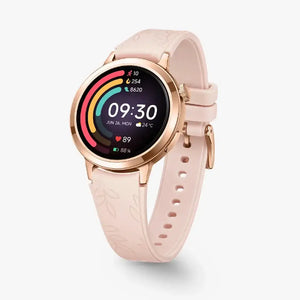
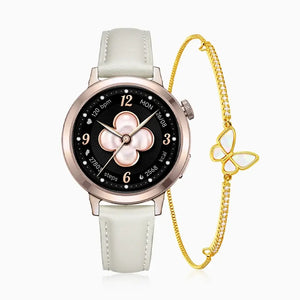
With the FANY Luna Silicone Series, you can review sleep tracking in the morning, notice changes in daily movement during work, use breathing as a short pause during a busy afternoon, and record activities such as walking, yoga, or Pilates after work. At night, sleep tracking becomes part of the routine again.

FANY Luna Silicone Series also brings together heart rate, activity, workouts, stress-related trends, breathing, sleep, and menstrual cycle tracking, allowing different wellness moments to be viewed as parts of the same daily rhythm.
The value of comprehensively utilizing these functions lies not only in obtaining more data but also in allowing you to select information that is relevant to your own lifestyle and conduct long-term tracking and review.
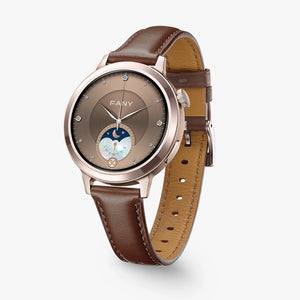
The FANY Luna Silicone Series features a 37.5mm case and a 1.1-inch AMOLED display. Its longest battery life can reach up to 7 days (depending on usage conditions). The leather version weighs approximately 23.9 grams, while the silicone version weighs about 29.2 grams.
Who Can Benefit From a Smartwatch-Based Wellness Routine?
This type of daily wellness routine may suit women who want to understand their sleep, movement, fitness, stress-related patterns, and women's wellness without turning everyday health into a complicated project.
The FANY Luna Silicone Series is designed more around everyday wellness, general fitness, and lifestyle use. If your main priorities are professional training analytics, advanced GPS performance, or medical-grade monitoring, a more specialized device may be more appropriate.
Consumer smartwatch data is intended to support personal awareness and trend tracking. It should not replace professional medical advice, diagnosis, or treatment.
A Simple Daily Wellness Routine You Can Actually Maintain
A good daily wellness routine should make your day feel simpler, not more complicated.
|
Time |
Habit |
What to Notice |
|
Morning |
Review sleep |
Has my sleep been consistent? |
|
Midday |
Move |
Have I been sitting too long? |
|
Afternoon |
Pause |
Do I need a short break? |
|
After work |
Activity |
Am I staying active consistently? |
|
Evening |
Wind down. |
Am I giving myself time to relax? |
|
Night |
Prepare for sleep |
Is my bedtime becoming more consistent? |
To establish effective health management habits, it is not necessary to strive for perfect data every day. The key lies in using several relevant indicators to understand one's own patterns and making small but practical adjustments over time. FANY Luna Silicone Series can be one tool within that routine—but it should not become the routine itself.
The purpose of health tracking is not to strive for perfect data but to understand one's own body rhythm and develop practical and feasible lifestyle habits.
FAQ:
1. How can a smartwatch help you build a daily wellness routine?
Smartwatches can help you monitor sleep, daily activities, exercise, heart rate, and other health-related trends. The most effective approach is to select several indicators related to your daily life and pay attention to their long-term changing patterns, rather than reacting only to single measurement results.
2. What should you track on a smartwatch every day?
You do not need to check everything. Choose a few metrics that match your goals, such as sleep tracking, activity, workouts, or menstrual cycle information, and look at how they change over several days or weeks.
3. Is FANY Luna suitable for a daily wellness routine?
FANY Luna can be an option for women who want sleep tracking, activity tracking, fitness tracking, stress awareness, and menstrual cycle tracking as part of an everyday wellness routine. It is better suited to lifestyle and general fitness use than professional sports analytics or medical-grade monitoring.
4. Can a smartwatch improve your wellness habits?
A smartwatch cannot create healthy habits on its own, but tracking can make certain routines more visible. For example, noticing that you consistently sleep less during busy weeks may encourage you to review your schedule.
5. Is it healthy to check smartwatch data every day?
Checking data can be useful, but you do not need to monitor every metric constantly. If tracking starts creating unnecessary pressure, consider checking trends less frequently and focusing on a small number of metrics relevant to your goals.
6. Can a smartwatch track menstrual cycles?
Some smartwatches provide menstrual cycle tracking based on information entered by the user and, depending on the device, other available data. These features can help users record patterns but should not be treated as a diagnostic tool.
7. Is FANY Luna suitable for everyday wellness tracking?
FANY Luna Silicone Series is designed for everyday wellness and general fitness use, with features including sleep, activity, workouts, heart rate, stress-related information, breathing, and menstrual cycle tracking. It is not intended to replace professional medical advice or specialized medical monitoring.
 Sia Cooper

A nurse-turned-personal trainer and founder of Diary of a Fit Mom, Sia lost 45 lbs through clean eating and lifestyle changes—and has been helping women do the same ever since. Drawing on her own journey through pregnancy, motherhood, and IVF, she's passionate about making fitness feel approachable, realistic, and empowering for women at every stage of life. Your trainer and friend.