







How Many Steps a Day Do You Really Need? A Practical Guide to Daily Step Goals
At the end of the day, you check your smartwatch and realize you've only taken 4,500 steps—nowhere near that familiar 10,000-step goal. Does that mean you haven't been active enough?
The truth is, there's no single daily step goal that works for everyone. Instead of chasing a specific number, it's more helpful to understand your current activity level and build a walking routine you can actually stick with.
Quick Answer: How Many Steps Should You Walk a Day?
Research suggests that walking around 7,000 steps a day is associated with a lower risk of several negative health outcomes. Meanwhile, 10,000 steps isn't a requirement everyone needs to meet.
If you're currently averaging 3,000–4,000 steps a day, there's no need to jump straight to 7,000. A more realistic approach is to start with your current average, gradually increase your activity, and focus on long-term progress.
Do You Really Need 10,000 Steps a Day?
The popularity of the 10,000-step goal originally came from Japanese pedometer marketing, rather than a universal medical recommendation.
A 2025 systematic review published in The Lancet Public Health found that walking approximately 7,000 steps per day was associated with a 47% lower relative risk of death from any cause, compared with walking 2,000 steps per day.
However, this doesn't mean reaching 7,000 steps guarantees better health. The findings primarily reflect associations across populations, while individual outcomes also depend on factors such as age, health conditions, and lifestyle.
|
Daily Steps |
What It Means |
Practical Recommendation |
|
2,000–3,000 |
A relatively low activity level |
Start with short walks |
|
4,000–5,000 |
A common starting point for some people |
Gradually add more movement |
|
Around 7,000 |
A research-supported reference point |
Focus on long-term consistency |
|
10,000+ |
A reasonable goal for some active individuals |
Not something everyone needs to achieve |
These ranges aren't medical classifications. Even if you're not reaching 7,000 steps yet, increasing your daily movement at a pace that works for you can still be worthwhile.
How Should You Set a Realistic Daily Step Goal?
Start by understanding your daily activity baseline.
You can use FANY Luna's step tracking to monitor your daily steps for about a week. Compare your office days, work-from-home days, and weekends to see how your activity naturally changes, then choose a realistic next goal.
|
Current Average |
Example Next Goal |
Simple Action |
|
3,000 steps |
3,500–4,000 |
Take a short walk after lunch |
|
4,500 steps |
5,000–5,500 |
Add a coffee-break walk |
|
6,000 steps |
6,500–7,000 |
Go for an after-dinner walk |
|
8,000 steps |
Maintain or increase gradually |
Focus on weekly consistency |
These are examples, not universal recommendations for how quickly to increase your steps.
For instance, if FANY Luna shows that you average 4,500 steps on weekdays, try adding one short walk to your schedule. After a while, review your activity records to see whether your new goal feels sustainable.
Baseline → Small Adjustment → Weekly Review
This approach is often easier to fit into everyday life than suddenly expecting yourself to walk 10,000 steps every day.
How Can You Get More Steps Without Going to the Gym?
Getting more daily steps doesn't necessarily mean setting aside an hour for exercise.
If you work in an office or from home, taking a lunchtime walk, walking to grab coffee, or adding a short walking portion to your commute—when it's safe and convenient—can all make a difference.
On weekends, visiting a farmers market, walking your dog, or taking a stroll through a park can help you stay active without feeling like you're following a strict workout plan.
Checking your daily steps on FANY Luna can help you see how these small activities add up. Even when you don't complete a formal workout, everyday movement still counts.
If you prefer a more structured brisk walk, you can also use FANY Luna's Walking mode to review your workout duration and heart rate data.
How Can FANY Luna Help You Build a Consistent Walking Routine?
Rather than focusing on reaching 10,000 steps once, it's more useful to pay attention to your activity patterns over time.
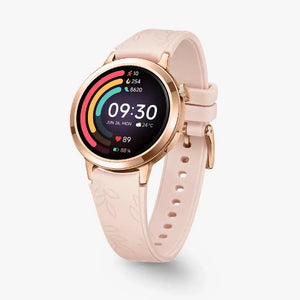
FANY Luna offers a step counter, activity tracking, and activity rings to help you monitor daily movement and see how you're progressing toward your personal goals.
For example, you can compare your weekday step counts over several weeks to see whether adding a lunchtime walk has made a noticeable difference.
FANY Luna also supports multiple workout modes, including walking. By looking at your steps, workout duration, and heart rate data together, you can get a more complete picture of a walking session instead of focusing only on your final step count.
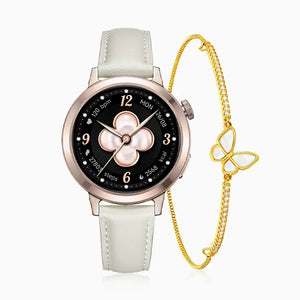
Comfort also matters if you plan to wear a smartwatch throughout the day. FANY Luna features a 37.5 mm case, with the leather-band version weighing approximately 23.9 g and the silicone-band version approximately 29.2 g. Its lightweight design makes it worth considering for everyday wear, although comfort ultimately depends on your wrist size, band fit, and personal preferences.
Are Smartwatch Step Counts Always Accurate?
Smartwatch step counts aren't always perfectly accurate.
Most devices estimate steps using motion sensors and algorithms. Factors such as band fit, wrist movement, and walking style can affect the results.
For example, pushing a stroller or holding treadmill handrails may limit your natural arm movement. Certain non-walking motions may also be mistakenly counted as steps.
When using FANY Luna, there's no need to worry too much about small differences in your daily readings. Instead of focusing on whether every single step was recorded, look at your activity trends across multiple days under similar conditions.
Step tracking is most useful for understanding your movement patterns, not for measuring every step with absolute precision.
Who Can Benefit From a Daily Step Goal?
A daily step goal can be especially helpful for people with desk jobs, remote workers, and anyone trying to build a more consistent walking routine.
For these users, FANY Luna can turn everyday movement into activity records, making small improvements easier to recognize over time.
However, if most of your exercise comes from cycling, swimming, or strength training, step counts won't fully reflect your activity level.
People with limited mobility, those recovering from an injury, or individuals with specific health needs may also benefit from more personalized ways to track progress.
Not everyone needs to increase their step count to measure fitness progress.
Final Thoughts: Focus on Progress, Not 10,000 Steps
Walking 10,000 steps a day isn't a requirement, and 7,000 steps isn't a universal standard for good health.
What matters more is understanding your starting point, choosing a daily step goal that fits your lifestyle, and building habits you can maintain.
With FANY Luna's step tracking, Activity Rings, and workout records, you can get a clearer picture of how your daily movement changes over time—without letting one day's numbers define your health or progress.
Your steps should support your lifestyle, not control it.
FAQ
1. How many steps a day do adults really need?
There's no universal number. Around 7,000 steps a day is a research-supported reference point, but your ideal goal depends on your current activity level, health, and lifestyle.
2. Do you really need 10,000 steps a day?
No. While 10,000 steps can be a personal fitness goal, it isn't a minimum health requirement for every adult.
3. Can FANY Luna track daily steps?
Yes, FANY Luna supports step counting, activity tracking, and activity rings to help you monitor your daily movement.
4. How can I use FANY Luna to set a daily step goal?
Track your average daily steps for about a week, then choose a small, realistic increase based on your schedule. Use FANY Luna's activity records to review your progress over time.
5. Can FANY Luna replace a fitness routine?
FANY Luna can help you track walking, heart rate, and workout data, but a well-rounded fitness routine should also include appropriate aerobic exercise, strength training, and consideration of your individual health needs.
 Sia Cooper


A nurse-turned-personal trainer and founder of Diary of a Fit Mom, Sia lost 45 lbs through clean eating and lifestyle changes—and has been helping women do the same ever since. Drawing on her own journey through pregnancy, motherhood, and IVF, she's passionate about making fitness feel approachable, realistic, and empowering for women at every stage of life. Your trainer and friend.